
Grading the 1953 $2 Bill: Professional Evaluation Standards
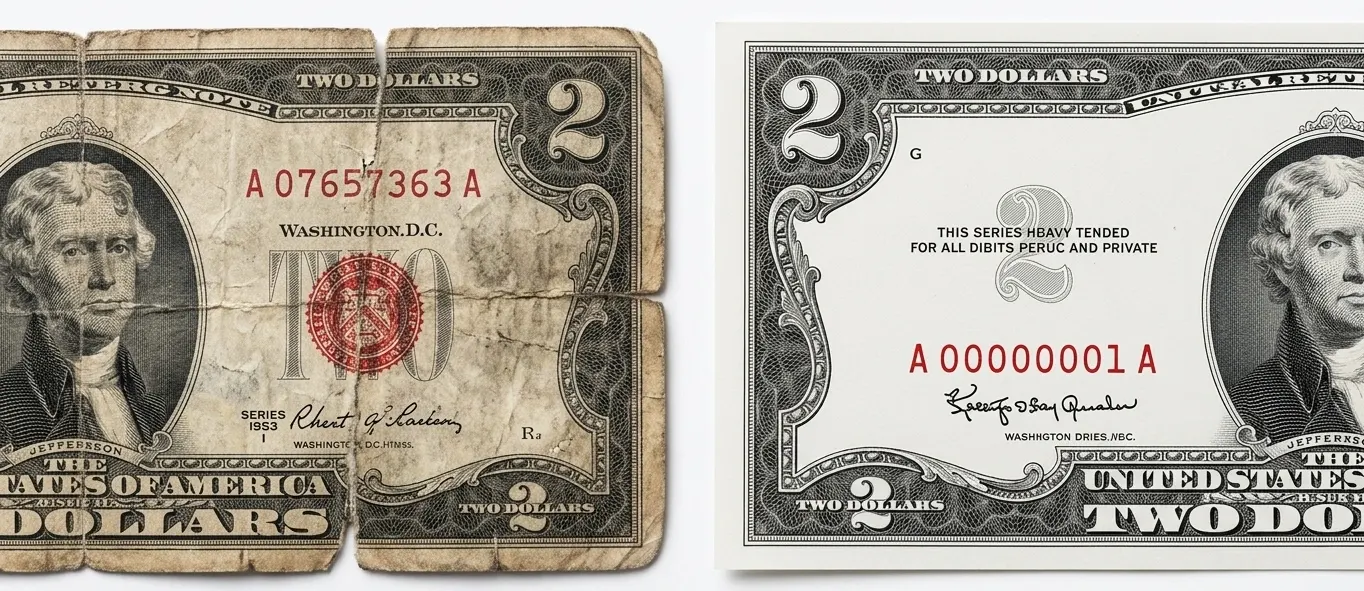
Professional appraisal of the 1953 series relies on a mix of strict visual logic and tool-based testing.
Experts at leading agencies apply the 70-point Sheldon scale to define exact paper condition.
Market participants in 2026 ignore vague descriptions, demanding numerical proof of a grade.
Shifting just one point between a 66 and 67 grade can trigger a price gap of over $200.
Spoiler: Spotting signs of repair results in an "Altered" tag and a 90% loss in 1953 $2 bill value.
Technical Metric | Standard Value |
Item Weight | 1.0 gram |
Note Length | 155.95 millimeters |
Note Width | 66.29 millimeters |
Paper Thickness | 0.11 millimeters |
Surface Feel | Raised ink texture |
Verifying the 1.0-gram mass helps detect traces of liquid cleaning that alters the paper fibers.
Using a micrometer allows inspectors to find thin spots where stains might have been removed.
Image Alignment and Border Analysis
Centering is the first factor separating a standard grade from the Gem category.
Human observation is boosted by software that measures the symmetry of the white borders.
Edge evaluation rules:
Perfect centering → equal distance from the frame to the edge on all four sides.
1-millimeter shift → loss of the Superb Gem status.
Frame touching the paper edge → grade drops below 20 points.
Grading logic → Broken symmetry → Lower visual appeal → 30-50% drop in market price.
Hitting the highest 70-point score requires perfect alignment via a coin checker app.
Paper Integrity and Structural Flaws
Base material made of cotton and linen is scanned for mechanical damage.
Specialists use angled lighting to find hidden creases within the fibers.
Fiber damage levels:
Sharp fold → broken internal paper bonds → grade capped at 50.
Soft bend → slight distortion without fiber breakage → grade up to 58.
Tiny holes → caused by staple use → grade drops below 20.
Presence of even one pinhole removes the note from the top-tier collectible category.
Current 2026 data shows such defects cut the lot price by 75% compared to perfect notes.
Ink Quality and Red Seal Inspection
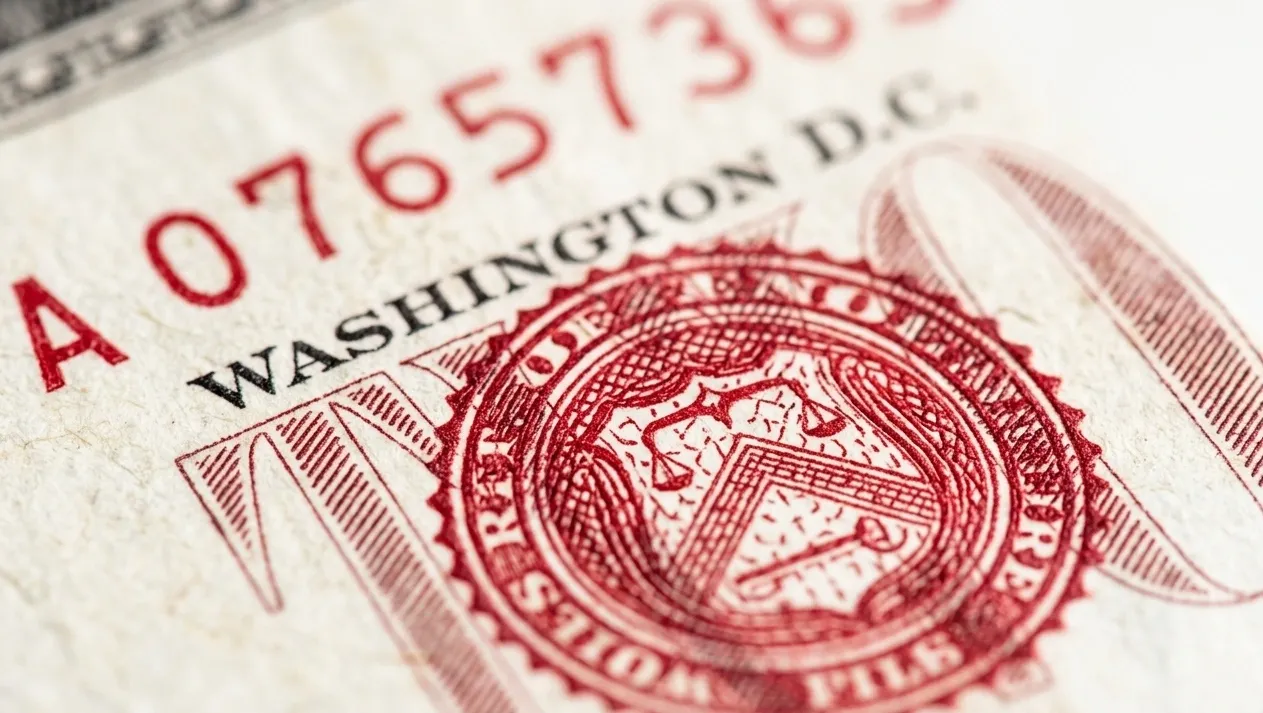
Red Treasury seals and serial numbers on 1953 notes demand extra attention.
Dye must stay bright without signs of fading or smudging.
Ink verification markers:
Seal tooth sharpness → crisp points without rounded edges.
Number depth → presence of a pressed-in mark visible on the back side.
Color saturation → zero pink halos around the printed letters.
Smearing of the red pigment suggests a "washing" attempt using liquid solutions.
Expertise in 2026 catches such tampering instantly through light-spectrum testing.
Grade Scale and 2026 Market Pricing
Numerical grades correlate directly with historical sales data.
Sheldon Grade | Paper Condition | Market Price in US Dollars |
VF 25 | Noted wear, 3-4 folds | $9 |
EF 40 | Light wear, 1 main fold | $16 |
MS 63 | Never circulated, minor flaws | $35 |
MS 65 | Perfect paper, great centering | $75 |
MS 67 | Exceptional preservation | $220 |
Yearly price growth for the MS 67 grade sits at roughly 5.5%.
Notes in VF 25 condition show price stagnation due to high supply.
High-Tech Tools: UV and Microscopy
Modern grading is impossible without high-end hardware.
Using ultraviolet light reveals what stays hidden from the naked eye.
Tool-based check steps:
UV lamp exposure → hunting for glowing glue or whitening agents.
Free Coin Value Checker App→ checking edges for artificial paper restoration.
Backlighting → finding hidden stains trapped inside the fibers.
Resale price for a restored 1953 note rarely goes above $4.
Corner Sharpness and Edge Quality
Corner condition is a critical factor for achieving high scores.
Rounding even one corner by 0.5 mm stops a note from grading higher than 64.
Edge quality standards:
Sharp corner → full retention of the original factory cutting geometry.
Frayed edge → breakdown of the linen and cotton structure.
Trimming → manual attempts to straighten the edges with a knife.
Detecting trimmed edges → disqualification of the note → cancellation of certification.
Inspectors compare factory blade marks against the edge geometry under high zoom.
Special Suffixes: EPQ and PPQ
Top scores often come with extra letter codes.
This confirms the paper has zero physical or liquid interference.
Term meanings:
Exceptional Paper Quality (EPQ) → superior paper state.
Premium Paper Quality (PPQ) → high-tier paper state.
These markers apply only to notes grading 65 or higher.
Having an EPQ tag on the holder boosts resale speed by 25-30%.
Serial Number Impact on Grade Logic
While grading measures condition, the serial number affects the depth of the check.
Notes with low digits or stars take twice as long to inspect.
Reasons for extra focus: → High risk of number faking by bleaching old ink. → Need to verify the authenticity of rare patterns. → Large financial liability for the grading company.
Grade 70 for serial number 00000001 requires a panel of three top experts.
Record sale for such a note hit $12,000 in 2024.
Natural Aging vs Damage
1953 paper has specific ways of aging naturally.
Yellowing does not always mean a poor condition grade.
Color change types:
Light cream tint → normal for original linen.
Brown spots (Foxing) → fungal growth that cuts the price.
Pure white → sign of dangerous liquid bleaching.
Experts separate the noble patina of time from aggressive tampering.
Natural patina on a 1.0-gram note does not block the path to top grades.
Self-Check Steps Before Submission
Owners should perform a basic filter before shipping lots.
Action sequence:
Clean the workspace of dust and oils.
Handle the note only with cotton gloves.
Use a high-power flashlight for backlighting.
Compare the serial number against fake databases.
Store in a rigid, PVC-free holder.
Proper preparation avoids wasting money on notes with low potential.
Market reality in 2026 is harsh toward amateur mistakes, valuing only verified quality.
Signature Analysis Under UV
Signatures by Ivy Baker Priest and other officials use specific ink mixes.
Grading involves checking how evenly the pigment has dried over 70+ years.
Real signature signs:
Even soaking into the cotton fibers.
Zero micro-cracks on the ink surface.
Color match with other notes from that period.
Using a laser printer to fake a signature is detected instantly.
Such fakes appear in 2% of old collections submitted for review.